

Technological intelligence refers to the ability to understand, adapt to, and effectively use technology in everyday life and changing environments. It reflects the growing importance of technology in modern society and emphasizes the skills required to utilize technological advancements effectively.
In organizations, technological intelligence is a systematic process of collecting, analyzing, and applying technological information to support strategic planning, innovation, and competitive advantage.
Characteristics of Technological Intelligence
- Systematic and Continuous: Ongoing process involving planning, collection, analysis, and dissemination of technological information.
- Action-Oriented: Generates actionable insights for decision-making and preventing technological surprises.
- Forward-Looking: Identifying future trends and anticipating technological changes.
- Scanning and Monitoring: Observing external environment through patents, publications, and market news.
- Data Integration: Combines multiple sources for comprehensive understanding.
- Knowledge Transformation: Converts raw data into strategic insights.
- Risk Management: Helps avoid obsolete technologies and legal risks.
- Competitive Advantage: Early identification of opportunities and threats.
Aspects of Technological Intelligence
- Information Needs and Diagnostics
- Information Acquisition
- Analysis and Synthesis
- Dissemination and Decision Making
- Strategic Framework
- System Integration
- Human Expertise
- Risk Mitigation
- Innovation Management
- Resource Optimization
Importance of Technological Intelligence
- Competitive Advantage and Survival
- Data-Driven Decision Making
- Efficiency and Cost Savings
- Innovation and Growth
- Strategic Adaptability
- Risk Management
- Long-Term Sustainability
Mobile Phone Addiction Among Students
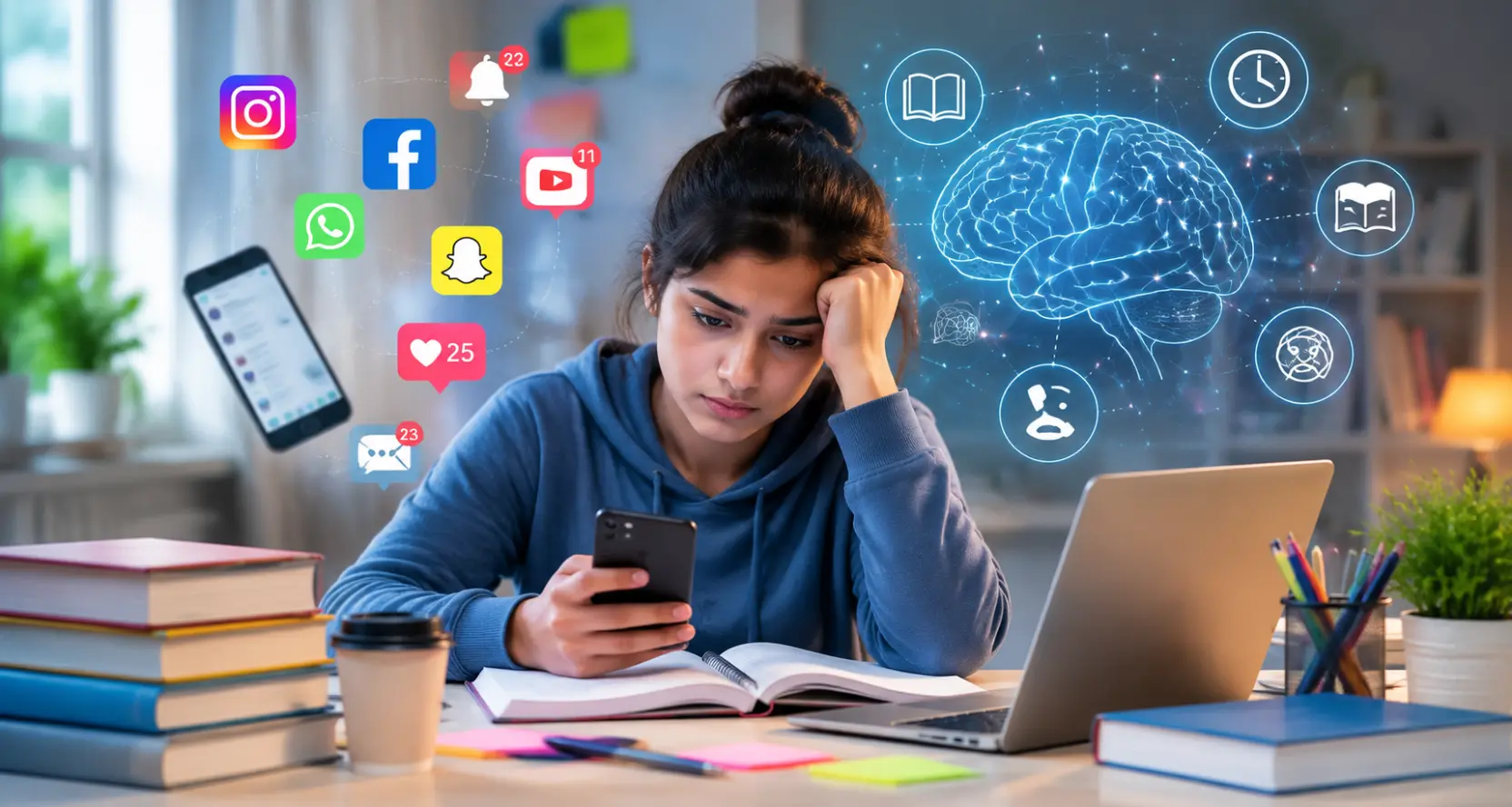
Mobile phone addiction refers to excessive smartphone use interfering with daily life, academic performance, social interactions, and psychological well-being. Intelligent technologies and algorithms can exacerbate compulsive usage.
Role of Technological Intelligence in Addiction
AI and machine learning in apps analyze behavior, provide personalized content, and continuously stimulate reward pathways, creating a strong urge to check phones frequently. Students are particularly vulnerable.
Effects of Mobile Phone Addiction on Students
Academic Effects
- Reduced concentration and attention span
- Poor academic performance
- Increased procrastination and distraction
Physical Effects
- Sleep disturbances
- Eye strain and headaches
- Reduced physical activity
Psychological Effects
- Increased stress, anxiety, and irritability
- Dependence on digital interactions
- Difficulty managing time and self-control
Social Effects
- Reduced face-to-face communication
- Social isolation
- Decreased participation in real-world activities